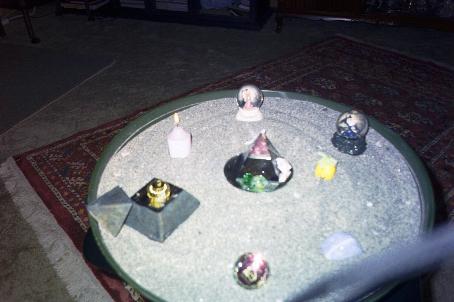
Sandtray and sandplay are other modalities I enjoy using with clients. There are two influential pioneers of sandtray or sandplay therapy, Margaret Lowenfeld and Dora Kalff. Margaret Lowenfeld was a child psychiatrist who observed how children played using sand at the beach to build their own little world. She took the concept into the therapy room and developed what she named the "World Technique" using a box filled with sand and small objects and figurines for children to "tell their story". It became known as sandtray therapy. Dora was a Swiss psychotherapist who studied with and took Margaret's concept a step further. She combined her studies in Jungian psychology and Buddhist philosophy with Margarets World Technique to develop sandplay therapy. Both sandtray and sandplay offer clients the opportunity to express themselves non-verbally. Dora recognised the correlation of creating a "world" using sand and objects to C.G. Jung's individuation process of tapping into a deeper level of the psyche to heal oneself. Dora recognised the ability of the sand-filled tray (while under the guidance of an experienced therapist) to do the "healing". When clients find "talking" about their problems too painful or may not have the verbal skills to express themselves adequately (as in the case of young children, people with speech difficulties or people with limited English language skills), choosing figurines and placing them into a sandbox is a relatively simple, safe and non-threatening way to tell their story. I learnt pretty early in my career not to try and diagnose client work but to listen and allow them to gain insights for themselves from their own interpretation of the objects chosen. I might 'see' things in the tray and ask questions about the symbolism of certain objects as understood by the client, just to check the relevance to their issues and reasons for referral.